


Sappi earnings date
Sappi (SPIA) Q4 2026 Earnings Report
DE:SPIA Q4 2026 EPS Results
- Actual EPS
- -EUR 0.05
- Consensus EPS
- -EUR 0.04
- Beat/Miss
- Missed by -EUR 0.00
- One Year Ago EPS
- -EUR 0.17
DE:SPIA Q4 2026 Revenue Results
- Actual Revenue
- EUR 1.20B
- Expected Revenue
- EUR 1.25B
- Beat/Miss
- Missed by -EUR 53.45M
- YoY Revenue Growth
- -5.09%
Earnings Announcement Details
- Quarter
- Q4 2026
- Date
- 11/06/2026
- Time
- Before Open
- Conference Call
- Friday, November 6, 2026
Sappi's next earnings date is estimated for February 10, 2027, based on past reporting schedules.
Q4 2026 Earnings Call Audio
Q4 2026 Earnings Slide Deck
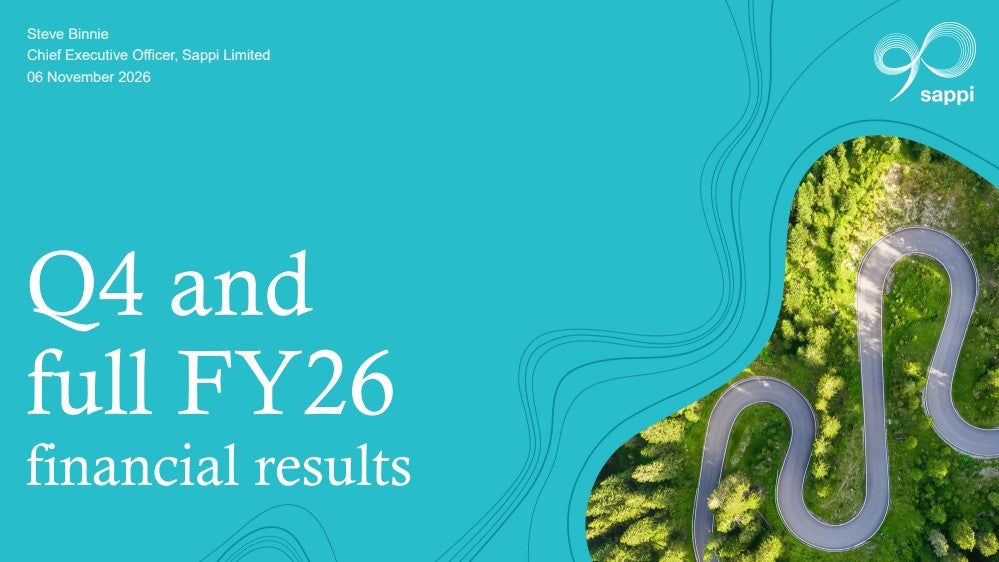
Q4 2026 Earnings Call Summary
The call was mixed but showed improving operating momentum. The full year was materially affected by lower pricing, structural graphics declines, adverse currency movements, elevated oil-linked costs, and Durban Port disruptions, and first-quarter EBITDA is expected to decline from the fourth quarter. However, management highlighted improving pulp and packaging markets, a successful Somerset PM2 ramp-up, at least 100,000 additional tons of expected volume, announced price increases, stable debt, ample liquidity, and anticipated cash generation and leverage reduction later in the year.
For Q1, Sappi guided that earnings would be down compared to Q4, with EBITDA below $99 million, including $41 million of scheduled shuts, mainly the Copia shut and a smaller shut at Somerset; the outlook uses today's prices, including elevated oil prices, with diesel prices in the U.S. at $6.40, while lower Brent crude or diesel prices could support higher profits. The company expects to catch up the 38,000 tons of DWP spillover, having invoiced around 10,000 tons and planning to clear the remaining 28,000 by the end of the quarter; the energy rebate for Europe is expected to be slightly less than last year. Somerset PM1 and PM2 reached about 85% operating rate by the end of Q4 and are expected to ramp up to full capacity run rate by the end of the year, with at least 100,000 extra for the year; CapEx is estimated at $240 million for next year versus $210 million for the year ended. Working capital is expected to show a relatively small increase in Q1 and will reverse later on in quarter 2 and into quarter 3, while net debt should be roughly constant, debt levels are expected to come down, and the company expects to be cash positive later in the year.
- Improved Fourth-Quarter PerformanceThe quarter was better despite continued pressures, with improving market conditions in dissolving pulp and packaging. Fourth-quarter EBITDA was $99 million, supported by pricing benefits in pulp, packaging volumes, and fixed-cost savings.
- Dissolving Pulp Market RecoveryDissolving pulp market conditions progressively improved since the beginning of calendar 2026, supported by healthy underlying fiber demand, relatively low downstream viscose inventories, and rising fiber prices. DWP prices had reached $924 per ton at the time of the call.
- Somerset PM2 Ramp-Up and Volume GrowthThe Somerset PM2 ramp-up progressed well after a slow start. The machine was operating full by year-end without downtime, had reached an operating rate of about 85% across PM1 and PM2 by the end of Q4, and is expected to ramp to full capacity run rate by year-end. Management expects at least 100,000 additional tons for the year ahead.
- Packaging Market ImprovementPackaging markets improved, particularly in U.S. SBS, where supply tightened, demand increased, selling prices rose, and further increases were announced. Containerboard prices in Europe also followed the U.S. upward, which management said could support South African pricing in the new financial year.
- Packaging Volumes and Market Share GainsPackaging volumes increased during the year, and Sappi secured additional Somerset volumes and gained market share as promised. The Somerset machines were described as running well, with product well received in the market and essentially sold out.
- Further Pricing Benefits ExpectedThe first Somerset-related price increase was realized at the end of the quarter, with benefits expected in the following quarter. Two further market-wide increases were announced, and management was optimistic about achieving them. In South Africa, contracts are structured with approximately 50% fixed pricing and 50% variable pricing, allowing rising global containerboard prices to support further increases.
- Graphics Margin DisciplineAlthough graphics volumes continued to decline, management said margins remained reasonable for the year through disciplined cost management and proactive capacity management. In the U.S., capacity reductions helped produce a better market balance and relatively stable prices.
- Cost-Saving and Productivity InitiativesSappi implemented significant cost savings and achieved good fixed-cost savings in the quarter. The company continues to set regional cost-saving targets across variable and fixed costs, with a focus on operational efficiencies, productivity, and pricing recovery.
- Debt Stability and Expected Leverage ReductionDespite very low profitability, Sappi kept debt relatively constant year-on-year and across the last six quarters. Management expects leverage ratios to decline as lower-profitability quarters from the prior year roll off, earnings improve, and absolute debt reduction progresses.
- Liquidity and RCF HeadroomSappi reported substantial liquidity flexibility through cash on hand and undrawn revolving credit facilities. Management said there were no restrictions on access to the RCF beyond a minimum threshold and that the company had more than sufficient headroom under its covenant suspension agreement.
- Expected Cash Generation Later in the YearAlthough a small cash outflow is expected in the first quarter, management expects improved profitability later in the year and said the company should generate cash for the full year, allowing debt levels to come down.
- Eurobond Refinancing FlexibilitySappi has begun discussions with banks and advisers regarding refinancing its 2028 bond and is evaluating all options, including potential secured lending. Management said it remains confident that the bond will be refinanced and that the financing and proceeds associated with the potential joint venture remain in place.
- Potential Joint Venture ProgressThe potential UPM joint venture is awaiting a decision from the European Competition Commission. Sappi has proposed remedies, with a specific decision date identified as January 7 or 8, and management said the proposed remedies would not affect the funding or proceeds expected from the deal.
- ESG and Employer RecognitionSappi was again ranked among Forbes' Top Global Employers and was recognized as one of the world's Top Companies for Women. Management highlighted that Sappi has been consistently ranked among the best employers, including as one of the few South African companies and companies in its industry to receive the recognition.
- Maintenance Capital Expenditure DisciplineSappi reduced discretionary CapEx while maintaining the spending required to keep mills operating optimally. CapEx was approximately $210 million for the year and is estimated at $240 million for the next year.
DE:SPIA Earnings History
| Report Date | Fiscal Quarter | Forecast / EPS | Last Year's EPS | EPS YoY Change | Press Release |
|---|---|---|---|---|---|
| Feb 10, 2027 | 2027 (Q1) | -0.02- | -0.03 | ― | ― |
| Nov 06, 2026 | 2026 (Q4) | -0.04-0.05 | -0.17 | 73.68% (+0.13) | |
| Aug 06, 2026 | 2026 (Q3) | -0.16-0.27 | -0.05 | -451.85% (-0.22) | |
| May 07, 2026 | 2026 (Q2) | -0.08-0.62 | -0.03 | -1960.61% (-0.59) | |
| Feb 04, 2026 | 2026 (Q1) | -0.02-0.03 | 0.11 | -125.00% (-0.14) | |
| Nov 06, 2025 | 2025 (Q4) | 0.00-0.17 | 0.13 | -235.71% (-0.30) | |
| Aug 07, 2025 | 2025 (Q3) | -0.01-0.05 | 0.08 | -162.07% (-0.13) | |
| May 08, 2025 | 2025 (Q2) | 0.02-0.03 | 0.05 | -166.00% (-0.08) | |
| Feb 05, 2025 | 2025 (Q1) | 0.110.11 | -0.19 | 157.69% (+0.30) | |
| Nov 07, 2024 | 2024 (Q4) | 0.110.13 | 0.06 | 100.00% (+0.06) |
The table shows recent earnings report dates and whether the forecast was beat or missed. See the change in forecast and EPS from the previous year.
