Microsoft (MSFT) has launched an internal “Code Red” effort after a major outage disrupted its cloud services for nearly 24 hours, Reuters reported, citing internal company memos. The November 12–13 incident knocked out Outlook, Teams, Exchange Online, and other Microsoft 365 products. It also disrupted government offices and delayed communications at trading firms and airlines.
According to internal memos reviewed by Reuters, the outage exposed flaws in both Microsoft’s engineering systems and its crisis response process. Microsoft blamed the failure on an undetected Windows scalability defect introduced in July, and CEO Satya Nadella later apologized for the disruption.
What Went Wrong During Microsoft’s Outage?
Microsoft called the outage the most customer-impacting incident in Exchange Online’s history. Jason Henderson, president of M365 Core, noted that never before had so many users lost email access for so long.
“Code Red means that this is the highest priority work for our team,” Henderson wrote in a memo to staff.
The incident also showed how difficult it was for engineers to coordinate during the crisis. Amanda Silver, a Microsoft corporate vice president, said responders exchanged more than 11,000 messages across 11 Teams chats. However, they struggled to track the problem because key data sat scattered across separate internal systems.
Silver described the response as working through a “fog of war.” Microsoft also found that urgent software fixes moved far too slowly—one critical fix took five to six days to reach users worldwide.
Microsoft Sets a One-Hour Recovery Target
To prevent a repeat, Microsoft outlined five key areas for improvement, including regional traffic isolation and faster recovery tools.
The company now aims to deploy critical fixes worldwide within one hour during future emergencies. It also plans to use AI agents to scan system data and spot issues before they spread.
Henderson will hold daily check-ins with the Microsoft 365 team, backed by weekly leadership reviews. Meanwhile, a Microsoft spokesperson told Reuters that the company is actively working to prevent future disruptions and continues its reliability push even after services come back online.
With reliability now its top internal priority, Microsoft faces growing pressure to keep its core workplace tools running smoothly as enterprise customers rely more heavily on its cloud and AI ecosystem.
Is Microsoft Stock a Buy, Sell, or Hold?
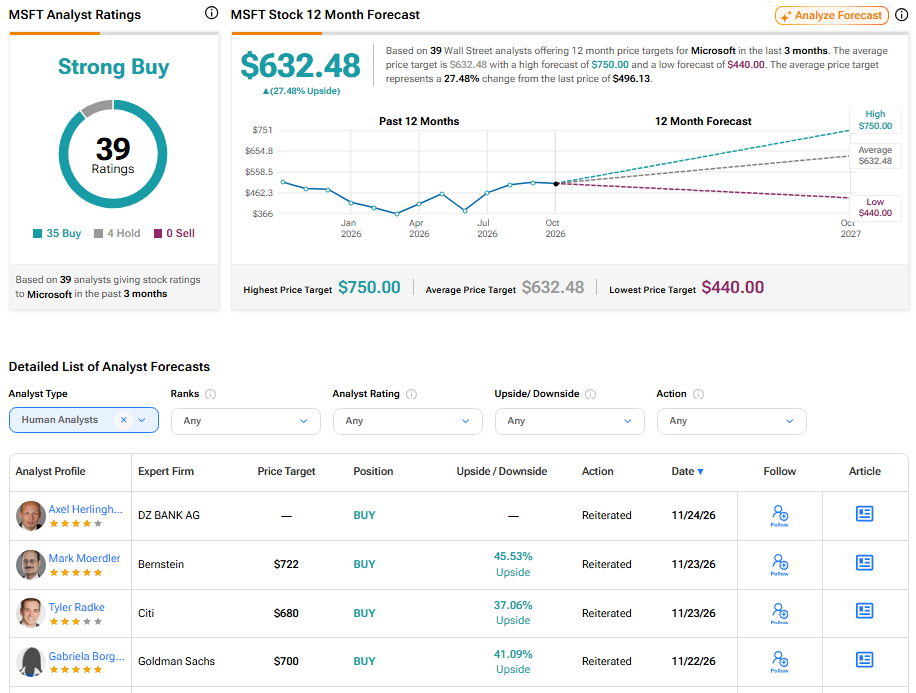
According to TipRanks, the analysts’ consensus rating for Microsoft is Strong Buy, based on 35 Buy and four Hold ratings over the past three months. With that comes an average MSFT stock price target of $632.48, implying a potential 27% upside for the shares. (See MSFT Stock Forecast)