Flash-memory maker SanDisk (SNDK) has surged 656% year-to-date. Indeed, it went from roughly $235 at the start of the year to a 52-week high of $2,354, then dropped by about half before rebounding again. Interestingly, this volatility divided hedge funds, as second-quarter regulatory filings showed both strong buying and selling. Leading the buying was Situational Awareness, which more than doubled its SanDisk position to roughly 2.5 million shares worth $5.7 billion by June 30.
Summer Sale - Claim 70% Off TipRanks
Curious why XOVR invested in Kalshi? Explore the long-term strategy behind the investment.Other funds also leaned bullish, as Rob Citrone’s Discovery Capital increased its SanDisk position from about 184,000 shares to roughly 208,000, while Rokos Capital raised its stake by 28% to 72,771 shares.
However, David Tepper’s Appaloosa exited completely by selling its entire roughly 280,000-share position after building it in Q1. At the same time, Renaissance Technologies cut its stake by more than 99% down to just 4,980 shares, while Stanley Druckenmiller’s Duquesne reduced its exposure from roughly 38,000 to 35,000 shares.
Situational Awareness Made an Even Bigger Memory Bet
When it comes to Situational Awareness, it’s no surprise that it had the strongest conviction in SanDisk stock, along with the overall memory sector. The AI-focused fund founded by former OpenAI researcher Leopold Aschenbrenner dramatically increased its position in Micron Technology (MU) as well. In fact, it raised its stake from about 17,000 shares to 4.8 million shares worth $5.6 billion. As a result, SanDisk and Micron together made up roughly 56% of its more than $20 billion U.S. stock portfolio at the end of the quarter.
However, that portfolio concentration quickly turned painful as the market reversed. SanDisk stock fell by 47% in July, while Micron dropped 29% over the same period. According to Business Insider, the fund’s highly leveraged portfolio then plunged by 67%, which triggered margin calls and forced Situational Awareness to sell most of its publicly traded holdings to Ken Griffin’s Citadel.
Therefore, it is important to note that 13F filings only show the positions that were held at the end of the quarter. This means that they do not capture those later forced sales.
Is SNDK Stock a Good Buy?
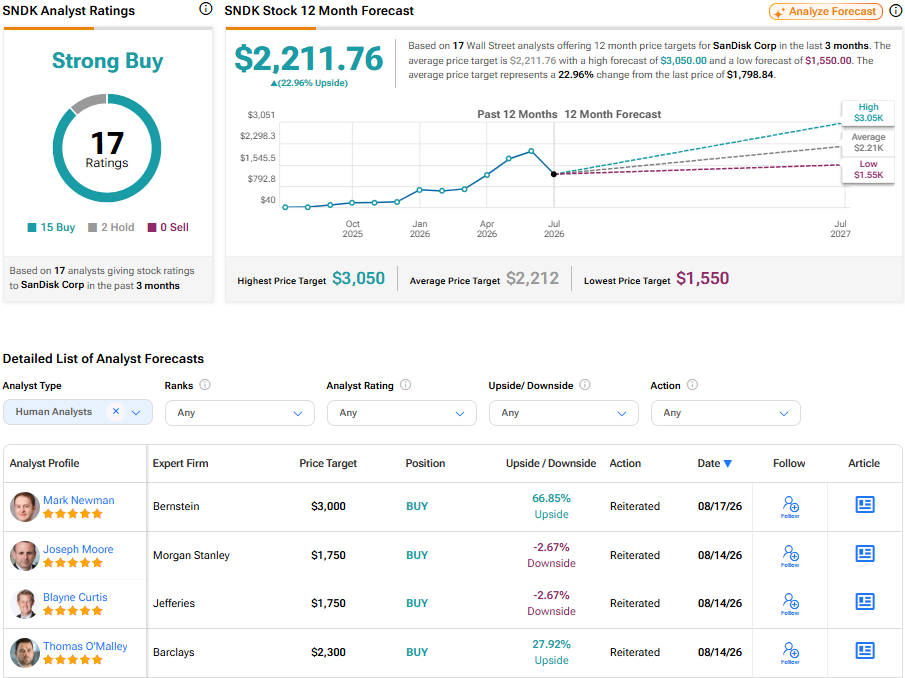
Turning to Wall Street, analysts have a Strong Buy consensus rating on SNDK stock based on 15 Buys, two Holds, and zero Sells assigned in the past three months, as indicated by the graphic below. Furthermore, the average SNDK price target of $2,212 per share implies 23% upside potential. (See SNDK Stock Forecast).