


Lockheed Martin (LMT) looks undervalued in today’s long restocking cycle, in my view. The defense giant is no longer selling into a routine defense-budget cycle. The wars in Ukraine and the Middle East have exposed thin weapons inventories. Meanwhile, NATO allies have committed to sharply increasing defense investment.
Lockheed is turning that urgency into long contracts and new manufacturing capacity. Today, the stock trades at about 17.2x the latest 2026 consensus earnings per share (EPS) estimate. I believe that’s a modest valuation beside a record $230.4 billion backlog and management’s forecast for roughly 8% sales growth this year. Thus, my LMT stock forecast remains bullish.

Restocking Is Becoming a Multi-Year Cycle
Restocking is becoming a multi-year cycle. In the past, it could mean a temporary lift from one conflict, but that’s no longer the case. Ukraine continues to consume missiles and air-defense equipment. Fighting in the Middle East is also draining U.S. inventories.
Pentagon data cited by Reuters showed that the U.S. had used more than 50,000 rockets, missiles, and rocket-propelled munitions since the war in Ukraine began. Meanwhile, NATO members agreed to invest 5% of GDP in defense and related security by 2035.
For Lockheed specifically, those commitments mean additional orders for systems governments need now. These include PAC-3 and THAAD interceptors for air and missile defense, PrSM and JASSM/LRASM for long-range strikes, and F-35 fighters.
The production commitments suggest that this is a long-term trend. A seven-year PAC-3 agreement is intended to raise annual capacity from roughly 600 interceptors to 2,000. A separate seven-year THAAD award worth up to $35 billion targets a fourfold increase. Lockheed is also quadrupling PrSM capacity, and this week secured an Army contract worth up to $1.2 billion to move PrSM Increment 2 into production.
JASSM and LRASM are also part of a large-lot procurement and capacity expansion, while the new AIM-260 framework adds another expected multiyear purchase. Factories and supplier networks take years to expand. The 3x–4x production goals are therefore stronger evidence of a durable rebuild, in my view.
The Backlog Is Turning Demand into Growth
The backlog is already turning demand into growth. Second-quarter sales rose 11% to $20.1 billion. Missiles and Fire Control led the company with 19% growth to $4.1 billion, driven mainly by higher volumes of PAC-3, THAAD, and PrSM.
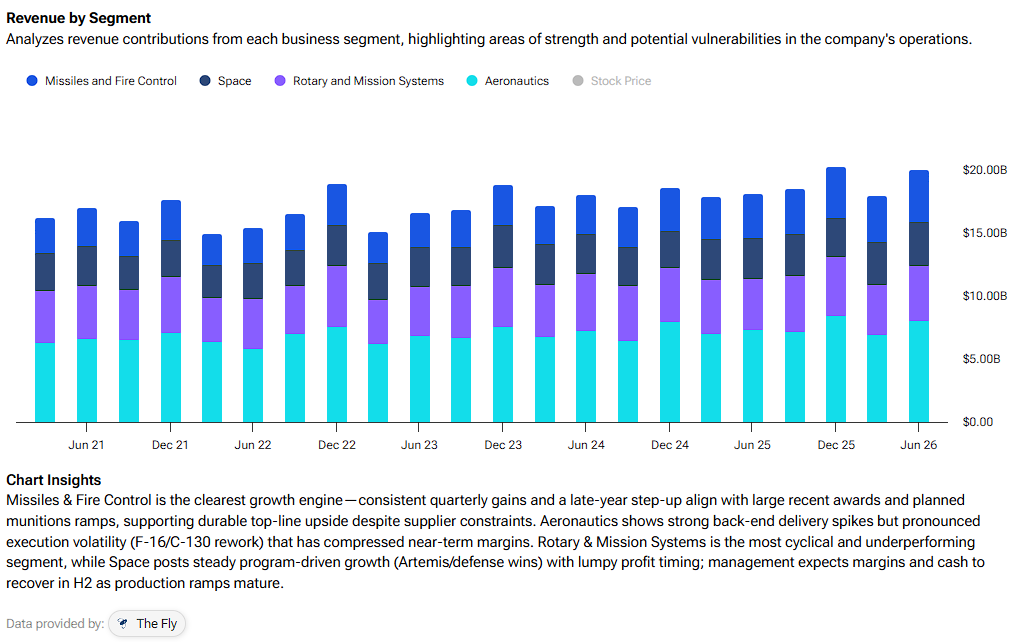
Lockheed also booked $65 billion of orders, lifting total backlog to a record $230.4 billion. Missiles and Fire Control backlog jumped 88% in six months to $87.9 billion. That does not eliminate execution risk, but it gives Lockheed unusually strong visibility. CEO Jim Taiclet now expects “accelerated year-over-year sales growth of approximately 8%” and free cash flow above $7 billion in 2026.
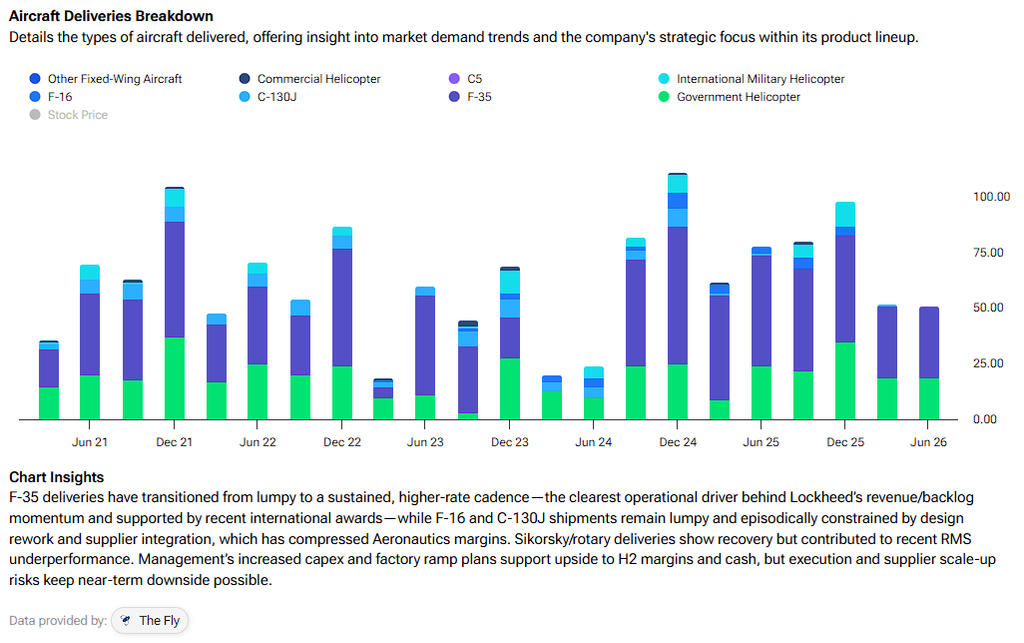
Missiles are not the whole story. Aeronautics sales increased 9%, including a $475 million lift from higher F-35 production volume. NATO customers are taking deliveries, and the U.S. has approved a possible $24.3 billion sale of 48 F-35s to Saudi Arabia, although Congress must still approve it. International fighter demand provides a second runway alongside munitions.
LMT’s Valuation Suggests Strong Upside
Considering these developments, I believe LMT’s valuation leaves strong upside potential. Today, the stock trades at 17.2x the latest 2026 consensus EPS estimate of $30.50 and 16.02x the 2027 estimate of $32.75. The available 2028 estimate of $35.27 puts the multiple at 14.88x.
Lockheed’s forward P/E generally sat around 17x–18x from 2022 through 2025, so the stock is not unusually cheap against its own history. So for me, the grounded bullish case is that you can pay a normal multiple while backlog is at a record and consensus expects EPS to keep rising through 2028. If the restocking cycle proves durable, the market may eventually accept a somewhat higher multiple.
The risks to keep in mind center around fixed-price programs that can produce further charges when schedules slip or costs rise. The $1.6 billion of program losses recorded in Q2 showed that. The F-35 still faces upgrade and sustainment issues. In addition, governments will push back on procurement costs, and Europe wants more domestic production. Still, the backlog and seven-year missile agreements make those risks easier to absorb.
Is Lockheed Martin Stock a Buy, Sell, or Hold?
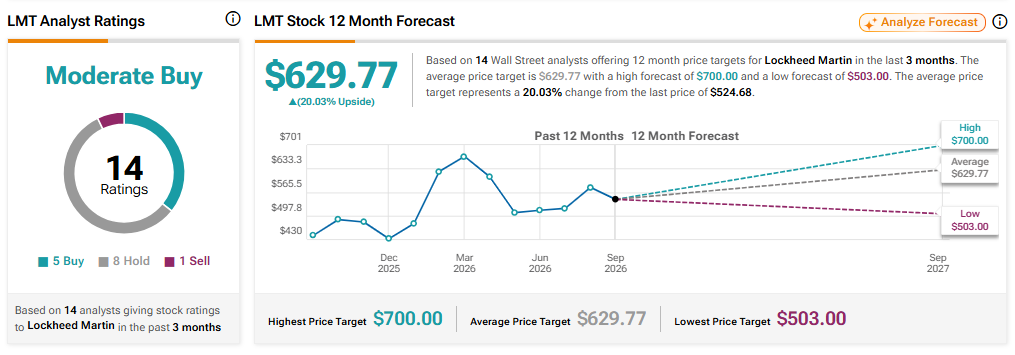
Is Lockheed Martin stock a Buy, Sell, or Hold? Wall Street is cautiously positive. LMT carries a Moderate Buy consensus rating, based on five Buys, eight Holds, and one Sell. The $629.77 average price target implies roughly 20% upside from current price levels.
Conclusion
Lockheed is not risk-free. Yet depleted inventories, higher allied spending, and long production agreements now reinforce one another. With missile output set to rise severalfold, F-35 demand extending internationally, and $230.4 billion of work booked, I believe the earnings cycle can last longer than the market assumes. That supports a bullish view of LMT.